USDF double bridle rules are changing: what Third Level riders need to know
If you compete in US dressage, you may have heard discussion recently about a significant change coming to Third Level: the double bridle.
Traditionally, reaching Third Level has been something of a milestone for dressage riders. Flying changes enter the picture, collection becomes increasingly important and, for many riders, it has also been the point at which the double bridle first becomes an option in competition.
But that is changing.
New rules are changing the tack permitted at Third Level, moving the level towards snaffle bridles only rather than giving competitors the option of riding in a double bridle.
It is an interesting change, not only from a competition-rule perspective, but also because it reflects a much wider conversation happening in dressage around training, horse welfare and when more advanced equipment should be introduced.
So, what exactly is changing, why does it matter, and what does it mean for riders progressing through the USDF levels?
Firstly, what is a double bridle?
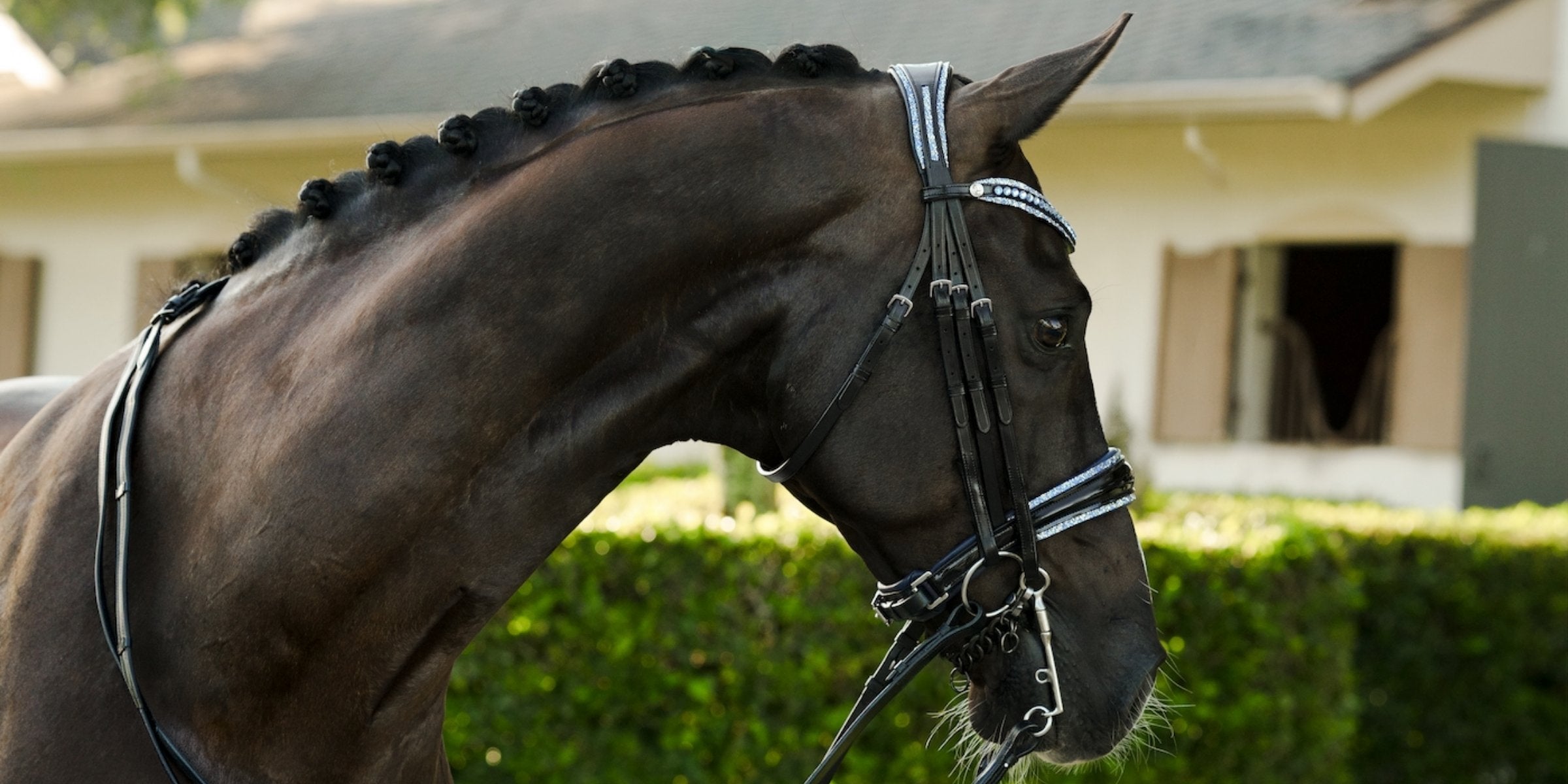
A double bridle uses two bits rather than one: a bridoon and a curb.
The bridoon is similar to a small snaffle and has its own pair of reins. The curb bit sits alongside it and works with a curb chain and shanks to introduce leverage. It is also controlled by its own pair of reins.
The rider therefore holds four reins.
Used correctly on an appropriately trained horse, the purpose of a double bridle is refinement.
It gives an experienced rider the ability to communicate through the bridoon and curb independently, making extremely subtle adjustments to the contact.
But more equipment does not automatically mean better communication.
A curb introduces leverage, which means relatively small movements of the rider's hand can create a greater effect. The horse also has to comfortably accommodate two bits within its mouth.
For these reasons, introducing a double bridle has traditionally been considered an advanced stage in a horse's training.
What are the current USDF and USEF double bridle rules?
This is where the recent news can become slightly confusing.
Although riders commonly talk about "USDF rules", tack requirements at USEF/USDF-recognized dressage competitions are governed by USEF rules.
Under the current 2026 USEF rules, Training Level, First Level and Second Level are ridden in a snaffle bridle.
At Third and Fourth Levels, however, riders currently have a choice: they can compete in either a snaffle or a double bridle.
That means that, right now, seeing a horse competing at Third Level in a double bridle is completely legal.
The current USEF Dressage Rules and Equipment resources provide the official rules and equipment guidance for competitors.
However, the new rule changes that progression.
What is changing at Third Level?
The significant change for dressage riders is that Third Level is moving to snaffle bridles only.
In other words, the traditional point at which riders could first choose to introduce a double bridle in USEF competition is shifting upwards.
The change means that Third Level riders will continue competing in a snaffle rather than having the option to compete in a double.
This is particularly noteworthy because Third Level has long occupied an interesting position in dressage training.
The horse is clearly moving into more advanced work. Collection becomes more demanding, lateral work develops further and flying changes are introduced.
Yet the new tack rule makes an important distinction:
More advanced work does not necessarily require more advanced bitting.
A horse should be capable of developing the balance, strength and self-carriage required at Third Level while remaining in a snaffle.
Why remove the double bridle from Third Level?
The change fits into a broader conversation taking place throughout equestrian sport about horse welfare, training progression and appropriate equipment.
A double bridle can be an exceptionally refined tool in experienced hands, but it also creates more complexity.
The horse carries two bits instead of one. The rider manages two pairs of reins instead of one. The curb introduces leverage. There are additional cheek pieces, additional hardware and a curb chain to fit correctly.
Moving the point at which a double can be used gives horses and riders more time to develop the foundations of collection and self-carriage in a snaffle.
It also reinforces an important principle of classical dressage:
The equipment should not create the movement.
A double bridle cannot create genuine collection.
Collection is produced through progressive training that develops strength, balance, engagement and self-carriage.
If the horse needs the curb rein to maintain its frame or balance, the double is being asked to compensate for something that should ultimately come from training.
Why Third Level is such an important stage
Third Level is a substantial step in a dressage horse's education.
At the lower levels, horses are progressively developing rhythm, relaxation, connection, impulsion and straightness. By Third Level, the expectations around engagement and collection become considerably greater.
Flying changes are introduced.
Half passes require greater lateral suppleness and control.
The horse must demonstrate more uphill balance and increasingly carry weight over the hindquarters.
Historically, the double bridle becoming available at this level may have made it seem as though the equipment was part of that progression.
The new rule separates the two ideas.
You can be riding a more advanced test without necessarily needing more equipment on the horse's head.
Does this mean double bridles are bad for horses?
No — and that is an important distinction.
Removing the double bridle from Third Level should not automatically be interpreted as a statement that double bridles are inherently harmful.
When correctly fitted and used by an educated rider on an appropriately trained horse, a double bridle can provide extremely refined communication.
The question is more about when it is appropriate to introduce one.
A rider needs sufficiently independent hands to manage four reins without unintentionally applying the curb.
The horse needs to be secure and confident in the contact.
And, perhaps most importantly, the horse should already understand collection rather than relying on the double bridle to produce it.
For riders whose horses are ready to progress to a double at the appropriate level, Lumiere offers a dedicated collection of anatomical double bridles, designed with the same focus on fit, comfort and anatomical shaping found throughout the Lumiere bridle range.
A double bridle also changes what is happening inside the horse's mouth
There is another important consideration that sometimes gets overlooked: anatomy.
Horses' mouths are not identical.
Just as horses have different shaped heads, different sized ears and different widths through their jaws, there can be considerable variation inside the mouth.
Tongue thickness, palate height, jaw width, the shape of the bars and the amount of space available within the oral cavity can all influence how a horse responds to a bit.
A double bridle requires the horse to accommodate two mouthpieces simultaneously.
For some horses, this presents relatively little difficulty.
For others, particularly those with a thick tongue or less room within the mouth, two bits may feel considerably more intrusive.
This is why bridle and bit selection should never simply be based on the horse's competition level.
Horses are individuals.
The fact that two horses are both competing at the same level does not mean they will necessarily be comfortable in the same equipment.
Moving between a snaffle and double bridle
One practical consideration for riders progressing through the dressage levels is that changing from a snaffle to a double does not necessarily mean completely changing the style and fit of bridle your horse is accustomed to.
The Paris bridle is a good example.
For riders competing in a snaffle, the Paris is available in both cavesson and Hanoverian snaffle configurations, while riders who later progress to a level where a double is permitted can choose the Paris double bridle.
This allows riders who like the fit and styling of the Paris to retain many of the same design principles as their horse progresses through the levels.
The Paris range features a gel-padded, poll-relief headpiece designed with space around the ears, alongside a broad gel-padded noseband and the distinctive crystal detailing that makes the Paris particularly suited to the dressage arena.
For a Third Level rider affected by the new rule, this means you can choose the snaffle configuration appropriate for competition without necessarily giving up the style of bridle you may eventually want to use as a double at a higher level.
Bridle fit becomes even more important with a double
The same principle applies to the external anatomy of the horse's head.
A double bridle introduces additional cheek pieces and hardware, so careful fitting is essential.
The headpiece should sit comfortably behind the ears without pressing into their base. The browband should provide enough room that it does not pull the headpiece forward, and the noseband should be positioned correctly without interfering with the bits.
At Lumiere Equestrian, our approach to bridle design places particular emphasis on anatomical shaping and horse comfort.
Thoughtful shaping around the poll and ears, soft leather and appropriate padding can help reduce unnecessary pressure while allowing the bridle to sit securely.
Different horses also prefer different styles. Riders can explore the complete Lumiere bridle collection, which includes snaffle, double, convertible, bitless and nosebandless options.
What should riders look for when introducing more advanced tack?
Regardless of the level at which a double bridle eventually becomes permitted, its introduction should be dictated by the horse rather than the calendar.
A horse that is ready for more advanced equipment should already be comfortable taking a soft, consistent contact in a snaffle.
The horse should not rely on the rider's hand for balance.
The rider should also be able to maintain an independent seat and hand, because managing four reins introduces considerably more opportunity for accidental pressure.
When a double is introduced, watch the horse closely.
Changes such as opening the mouth, excessive tongue movement, head shaking, dropping behind the contact, reluctance to take the rein forward or suddenly becoming unsettled in the contact deserve attention.
Rather than assuming the horse simply needs to "get used to it", consider the fit of the bridle, the bits, the amount of space within the mouth and whether the horse is genuinely ready.
What does the new Third Level rule mean for riders?
For riders currently working towards Third Level, the change is relatively simple:
Focus on developing the work in your snaffle.
The flying changes, half passes and increased collection expected at Third Level should come from the horse's education and physical development rather than from changing the bridle.
In many ways, that makes the transition through the levels simpler.
Instead of reaching Third Level and feeling that you should introduce a double because everyone else is doing so, riders can continue developing their horse in familiar equipment.
And a snaffle bridle certainly doesn't need to look like the "less advanced" option.
A dressage-focused snaffle such as the Paris bridle, or one of the many styles within Lumiere's dressage bridle collection, can still create a polished competition look while allowing the horse to continue its education in a single bit.
It may also remove some of the pressure riders feel to introduce a double before either they or their horse are ready.
What about Fourth Level and FEI dressage?
This is where riders need to pay particularly close attention to the current rules.
Rules regarding snaffles and double bridles can differ depending on the level, whether a test is being ridden under national USEF rules or FEI rules, and whether the competition is a qualifier or championship.
Requirements can also change.
USEF maintains a dedicated Dressage Rules and Equipment page, including the current rulebook and Annex A covering permitted bits, bridles, saddlery and equipment.
Riders moving beyond Third Level should check the latest version before competing rather than relying on what was permitted during a previous season.
Once the horse and rider reach a level where the double is permitted, there is also no single "look" a double bridle needs to have. Lumiere's double bridle collection ranges from understated designs through to statement dressage bridles such as the Paris double bridle, allowing riders to select a design that suits both their horse and their personal competition style.
A shift towards training before equipment
Perhaps the most interesting aspect of the new Third Level rule is what it says about the direction dressage is moving in.
Tack will always have an important role.
A beautifully fitted bridle, an appropriately selected bit and well-adjusted equipment can help facilitate clear, comfortable communication between horse and rider.
But equipment should complement training rather than replace it.
At Lumiere Equestrian, this is particularly relevant to how we think about bridles. Anatomical design isn't about adding more equipment to solve a problem. It is about considering how the equipment already being used interacts with the horse.
Whether you are riding a young horse in its first snaffle, heading down the centreline at Third Level or eventually progressing to a double bridle, fit, comfort and communication remain fundamental.
The new Third Level rule reinforces that philosophy in an interesting way.
Reaching a more advanced level doesn't automatically mean adding more tack.
Sometimes, progression means being able to do more with less.
A note on competition rules
Dressage equipment regulations can change, and the rules that apply to USEF national tests are not always identical to those governing FEI competition.
The current 2026 USEF rules still permit a snaffle or double bridle at Third Level. The newly announced change affects the rules going forward, so riders should check the effective date and current requirements before their first competition of the new season.
For the most up-to-date information, always refer to the official USEF Dressage Rules and Equipment page and current USEF rulebook.