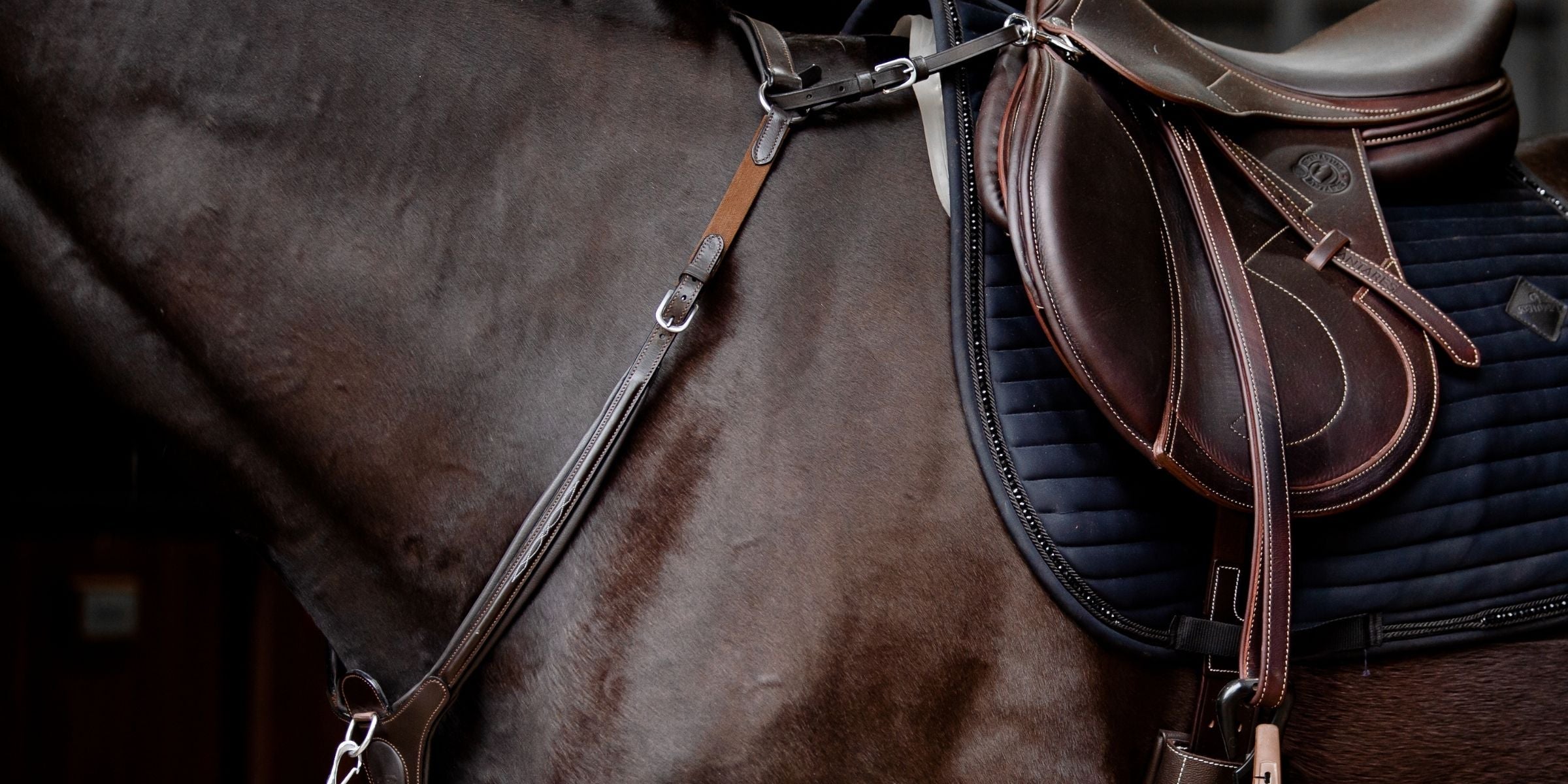
Why breastplates are the most underrated piece of tack
When riders discuss essential tack, the conversation usually centres around saddles, bridles, bits and girths. These pieces of equipment understandably receive a great deal of attention because they directly influence communication, comfort and performance. Yet one piece of tack consistently flies under the radar despite having a significant impact on both horse and rider: the breastplate.
For many riders, a breastplate is viewed as an optional accessory. Some consider it purely decorative, while others only reach for one when competing. However, a well-designed breastplate can improve saddle stability, enhance rider security, increase horse comfort and even support better performance across a range of disciplines.
Whether you compete in eventing, showjumping, dressage, pony club, hunting or pleasure riding, understanding the role of a breastplate can help you make better decisions for your horse's comfort and your own safety. In many cases, it may be one of the most valuable yet overlooked investments in your tack room.
What is a breastplate and what does it actually do?
At its most basic, a breastplate is designed to help prevent the saddle from moving backwards. It achieves this by creating an anchor point between the saddle and the horse's chest.
While many riders assume a correctly fitted saddle should never move, the reality is that horses come in an enormous variety of shapes. High-withered Thoroughbreds, broad Warmbloods, compact ponies and round cobs all present different fitting challenges. Even a professionally fitted saddle may experience some movement during strenuous work, particularly when jumping, galloping, riding across uneven terrain or travelling downhill.
A breastplate provides additional stability by helping keep the saddle in its intended position. This allows both horse and rider to move more comfortably and confidently.
Importantly, a breastplate should never be used as a substitute for a properly fitted saddle. Instead, it should be viewed as a complementary piece of equipment that assists an already well-fitted setup.
Why breastplates benefit the horse
One of the biggest misconceptions surrounding breastplates is that they only benefit the rider. In reality, many horses gain significant comfort from a correctly fitted breastplate.
When a saddle shifts backwards during work, pressure points can develop under the panels and tree. This movement can create discomfort, restriction and irritation over time. By helping stabilise the saddle, a breastplate can minimise unnecessary movement and maintain more consistent pressure distribution.
Modern anatomical breastplates are also designed with freedom of movement in mind. Older designs could sometimes restrict the shoulder, particularly when adjusted too tightly. Contemporary breastplates, however, are shaped to follow the horse's natural anatomy and allow the shoulder to rotate freely.
A great example is the Anka Leather Breastplate, which features an anatomical shape designed to avoid shoulder restriction while providing saddle stability. It includes gel padding through the chest, shoulders and wither to maximise comfort during work.
Why breastplates benefit the rider
The rider often notices the advantages of a breastplate immediately.
A stable saddle creates a more secure seat. When the saddle remains correctly positioned, riders can maintain better balance and alignment. This is particularly important when jumping, riding cross-country, navigating steep terrain or working young horses.
Even subtle saddle movement can affect rider position. A saddle that shifts backwards can alter leg position, balance and effectiveness of aids. Over time, this can lead to compensatory habits that negatively affect riding performance.
For competitive riders, breastplates often provide an additional level of confidence. Knowing the saddle is less likely to move allows the rider to focus fully on performance rather than equipment concerns.
Understanding different breastplate styles
Not all breastplates serve exactly the same purpose. Different designs offer varying levels of stability, freedom of movement and suitability for different disciplines.
Three-point breastplates
Three-point breastplates are among the simplest and most versatile styles available.
As the name suggests, they attach at three primary points, typically connecting to the saddle and girth. They provide effective saddle stability while maintaining a clean and uncomplicated appearance.
Three-point designs are popular among eventers, showjumpers and riders who prefer minimal bulk.
The Victory 3-Point Leather Breastplate and the Perseus breastplate are a modern interpretation of the traditional stockman's breastplate. Featuring plush gel padding, it offers comfort while maintaining a streamlined design that suits a wide variety of horses and riding styles.
Many riders choose a three-point breastplate because it strikes an excellent balance between support and simplicity.
Five-point breastplates
For riders seeking maximum stability, five-point breastplates are often considered the gold standard.
These designs distribute pressure across additional attachment points, helping maintain saddle position during demanding work such as cross-country, hunting and upper-level jumping.
A well-designed five-point breastplate spreads forces more evenly across the horse's chest and shoulders. This can improve comfort while providing exceptional security.
The Lumiere Antiqua 5-Point Leather Breastplate is a particularly thoughtful example. Unlike many breastplates that only provide padding at the shoulders, the Antiqua includes Australian sheepskin padding across both the shoulders and chest, where impact absorption is often needed most. Additional gel padding through the wither, shoulders and between-leg strap further enhances comfort.
For riders tackling cross-country courses, hunting fields or challenging terrain, a quality five-point breastplate can be one of the most valuable additions to their tack setup.
Dressage breastplates
For many years, breastplates were rarely seen in dressage. Today, that has changed dramatically.
Modern dressage riders increasingly appreciate the benefits of saddle stability while also valuing a polished appearance. As a result, dressage-specific breastplates have become increasingly popular.
Dressage breastplates generally feature a more minimalist design that complements the clean lines of traditional dressage turnout. They offer stability without the visual bulk often associated with jumping breastplates.
The Alicia Leather Dressage Breastplate has become particularly popular among riders seeking a sleek, elegant appearance while still benefiting from improved saddle security.
The rise of bridge-style breastplates
One of the newest developments in breastplate design is the introduction of bridge-style breastplates, which offer all the benefits of traditional saddle stability while providing an additional point of security for the rider. These breastplates feature a central bridge or grab strap positioned across the horse's neck, giving riders something secure to hold if needed. This can be particularly beneficial when riding young horses, tackling cross-country courses, navigating difficult terrain, or simply building confidence in the saddle.
The new Parker Bridge Breastplate from Lumiere Equestrian combines the stability benefits of a traditional breastplate with the practicality of an integrated neck strap. The design allows riders to maintain a secure handhold without needing a separate neck strap, creating a cleaner and more streamlined setup. For riders working with green horses, returning from a confidence setback, or competing in disciplines where unexpected moments can occur, having a strap readily available can make a significant difference to rider security and balance. The Parker also reflects a broader trend in modern tack design: equipment that not only enhances horse comfort and saddle stability but also supports rider confidence and safety.
Breastplates and martingales
Another reason breastplates are often underrated is their role as an attachment point for martingales.
Many riders use breastplates primarily because they need somewhere to attach running martingale rings. In fact, some saddlery brands report that a significant percentage of riders wear breastplates primarily for this purpose rather than for saddle stability.
Using a breastplate as the foundation for martingale attachments can create a cleaner and more stable setup. Riders can further customise their equipment using accessories such as:
-
Leather martingale rings
-
Martingale bibs
-
Running martingales
-
Standing martingales where discipline rules allow
This flexibility allows riders to tailor their tack to suit individual horses and riding goals.
The importance of correct fit
Even the best breastplate can cause problems if fitted incorrectly.
A breastplate should sit securely without pulling the saddle forward or restricting shoulder movement. The horse should be able to extend through the shoulder freely during all phases of movement.
Signs a breastplate may be too tight include:
-
Shortened stride
-
Reluctance to move forward
-
Rubbing or hair loss
-
Resistance during work
-
Visible restriction through the shoulder
Conversely, a breastplate that is too loose may fail to provide meaningful support.
High-quality breastplates offer multiple adjustment points to accommodate different conformations. Products such as the Antiqua and Anka breastplates feature extensive adjustability to help achieve an optimal fit.
Why anatomy matters more than ever
Today's riders are more conscious than ever of equine biomechanics.
Research and practical experience continue to demonstrate that unrestricted movement contributes significantly to performance, comfort and long-term soundness. This has led to growing demand for anatomical tack designs that work with the horse's body rather than against it.
Lumiere Equestrian's breastplate collection reflects this philosophy, incorporating anatomical shaping, premium leather and strategic gel padding to minimise pressure points and support freedom of movement. The brand places significant emphasis on comfort-focused design throughout its breastplate range.
Why every rider should consider a breastplate
While not every horse requires a breastplate every day, nearly every rider can benefit from understanding their value.
They provide:
-
Greater saddle stability
-
Improved rider security
-
Enhanced horse comfort
-
Better pressure distribution
-
Additional attachment options for martingales
-
Increased confidence during demanding work
-
A polished and professional appearance
Perhaps most importantly, a well-fitted breastplate helps maintain harmony between horse, rider and saddle.
Final thoughts
Breastplates may not receive the same attention as saddles and bridles, but their influence on performance and comfort should not be underestimated. From maintaining saddle position during a cross-country round to providing subtle stability during everyday schooling, they offer benefits that many riders overlook.
Whether you prefer the streamlined simplicity of the Anka, the security of the Antiqua five-point design, the clean practicality of the Victory three-point style or the elegance of the Alicia dressage breastplate, investing in a quality anatomical breastplate can make a meaningful difference to both horse and rider.
In a world where riders constantly search for ways to improve performance, comfort and partnership, the humble breastplate may just be the most underrated piece of tack in the entire tack room.
Q&As: