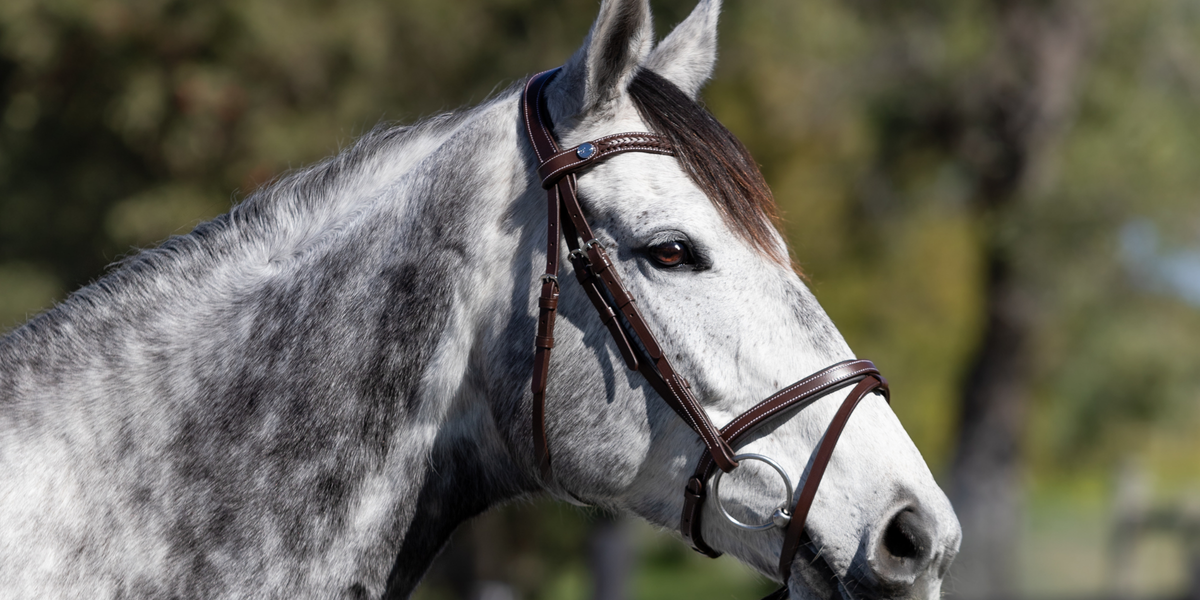
Why does my horse toss its head? Common causes and what to do
Few things are more frustrating in the saddle than a horse that won't settle in the contact. The head comes up, the neck tightens, the nose pokes out, and just as it starts to feel steady, it unravels again. Horse head tossing and an unsteady head carriage can leave us questioning our riding, our horse's comfort, and quietly chip away at your confidence.
Most of us respond the way we've been taught. We book another lesson. Then a clinic. We try softer hands, more leg, a different bit. Months pass, the lesson fees add up, and the head tossing is still there.
But what if your horse has been trying to tell you something all along?
Horses can't tell us that their headpiece is pinching behind the ears or that their noseband is pressing on a sensitive nerve. They tell us the only way they can: by moving their head, changing the contact and showing resistance. Before you invest more time and money trying to train the problem away, it's worth listening to your horse and taking a closer look at what they're wearing. Sometimes the answer is hanging in your tack room.
Every horse tosses its head from time to time. A fly lands on an ear, the wind catches the mane, or your horse simply stretches into the contact. But when head tossing becomes frequent or intense, or happens mainly under saddle, it's worth investigating. Research suggests around one in 25 horses is reported by its owner to shake its head more than normal, and only a fraction of those owners seek veterinary help.
The good news is that many causes are straightforward to find and fix, and tack fit is one of the first places to look. In this guide, we explain the most common reasons horses toss their heads, how to work through them in a sensible order, and when it's time to call your vet.
Head tossing is communication, not naughtiness
It was once common to assume a head-tossing horse was being badly behaved, and that a stronger bit or tighter noseband would sort it out. Vets and welfare experts now take the opposite view. Head tossing is usually a response to pain or irritation, so punishing it or clamping the mouth shut tends to make things worse.
That's why the first question to ask isn't “how do I stop this?” but “what is my horse trying to tell me?”
Normal head movement vs a head tossing problem
Some head movement is perfectly normal, such as shaking off flies or stretching down into the contact. It's worth investigating if you notice:
- Tossing that happens repeatedly or in a pattern
- Sharp, vertical flicking or jerking of the head
- Tossing that gets worse when ridden, or during particular movements
- An unsteady head carriage or a contact that never quite settles
- Snorting, sneezing or rubbing the nose on legs, the ground or you
- Reluctance to be bridled or to have the face touched
- A change from your horse's usual behaviour
The 7 most common causes of head tossing
There's rarely just one reason, so it helps to think in categories.
1. Tack that doesn't fit
Ill-fitting tack is one of the most common and most fixable causes, and it's often overlooked while riders focus on training. Check these areas first:
- The bit. A bit that's too wide, too narrow, too thick or sitting at the wrong height can pinch the lips or bang against the teeth. If you've recently changed bits, recheck the whole bridle.
- The noseband. One that's too tight or sitting too low can restrict breathing and chewing, and press on sensitive nerves across the face.
- The headpiece and browband. Straps that press on the poll, rub the base of the ears or pull the headpiece forward can make a horse uncomfortable and head-shy. A browband that's too small is a common culprit.
- Cheekpieces and throatlash. Buckles sitting on the cheekbone, or a throatlash that's too snug, can cause rubbing and restriction.
- The saddle and girth. Pain from a poorly fitting saddle or tight girth can show up as head tossing, because discomfort in the back and shoulders often travels forward.
Anatomic design can help here. A bridle with a padded, cut-away headpiece that clears the ears and spreads pressure across the poll, plus a shaped noseband that avoids the sensitive nerve areas of the face, removes some of the most common pressure points before they start. Browse our anatomic bridles to see how this works in practice, or read our guide to the seven signs your horse's bridle doesn't fit.
2. Dental problems
Sharp enamel points, hooks, loose or fractured teeth and mouth ulcers can all make the bit uncomfortable. Horses with sore mouths may toss their heads, drop feed, chew awkwardly or resist the contact. Regular checks by a qualified equine dentist or vet are a must, and a good first step if your horse has started tossing its head.
3. Pain elsewhere in the body
Pain in the back, neck, jaw joint or limbs can all lead to head tossing as a way of expressing discomfort. A stiff neck, a sore sacroiliac region or a tight jaw can make the bit feel unbearable. If tack and teeth check out, ask your vet about a full musculoskeletal assessment.
4. Irritation from the environment
Horses are sensitive to what's around them. Head tossing can be triggered by:
- Flies, midges and other biting insects
- Dust, pollen and mould spores in hay, bedding or arenas
- Wind blowing into the face or ears
- Bright sunlight, particularly if your horse is sensitive to glare
- Ear mites or debris in the ears
If tossing is worse at certain times of year or in particular places, keep a diary. Patterns are invaluable clues.
5. Eye, ear, sinus and airway problems
Sore eyes, ear infections, sinus problems and airway irritation can all trigger head tossing. A sinus infection, for example, may irritate the nerve that supplies the face and cause a horse to shake its head. Nasal discharge, runny eyes or a bad smell from the nose are all reasons to call your vet.
6. Rider and training factors
Sometimes the cause isn't in the horse at all. Heavy or unsteady hands, an unbalanced position, or a training approach that asks for more than the horse can currently give can all make head tossing worse. A good coach can help you see whether your contact is part of the picture, and lessons are far more rewarding once you know your horse is comfortable.
7. Trigeminal-mediated headshaking
When a horse has been checked thoroughly and no other cause is found, vets may diagnose trigeminal-mediated headshaking. This is thought to be a condition in which the trigeminal nerve, the main sensory nerve of the face, becomes oversensitive and causes facial pain. It's often compared to trigeminal neuralgia in people, who describe sensations such as burning, tingling or electric shocks.
Typical signs include:
- Sharp, vertical flicking or tossing of the head, often in a way that looks involuntary
- Snorting, sneezing or acting as if something is up the nose
- Rubbing the nose or face on legs, ropes or the ground
- Signs that are worse during exercise, and sometimes seasonal or triggered by sunlight, wind or pollen
- A horse that seems distressed, or is reluctant to move forward
It most often appears in horses aged between about four and 12, and is not something a horse is born with. Diagnosis is by exclusion, which means other causes need to be ruled out first, ideally with your vet and sometimes with specialist imaging at a referral hospital.
There's currently no single treatment that works for every horse, but there are options to explore with your vet, including nose nets, nutritional support and other therapies. If your horse seems distressed at rest, or the headshaking comes on suddenly and severely, call your vet urgently.
How to find the cause of head tossing, step by step
Working through the possibilities in a logical order saves time, money and stress for you and your horse.
- Film it. Record your horse in different situations: in hand, on the lunge, ridden, in the paddock and in the stable. Videos help your vet understand the pattern.
- Check your tack. Start with the bridle: bit size and position, noseband height and tightness, headpiece clearance around the ears and cheekpiece length. Then check the saddle and girth.
- Book a dental check. Rule out sharp points, hooks and other mouth problems.
- Look for environmental triggers. Note the time of day, weather, season and location when tossing happens.
- Try removing the bit or switching tack, if safe to do so. Observe on the ground first. If tossing continues without the bit, the cause may lie elsewhere.
- Call your vet. If the steps above don't resolve it, ask for a full examination, including eyes, ears, sinuses, back, neck and jaw.
What not to do when your horse tosses its head
Resist the urge to tighten the noseband, add a stronger bit or use gadgets to hold the head down. These can mask the signs, make pain worse and risk injury to you and your horse. If your horse is clearly uncomfortable, stop riding until you've found the cause.
Using your tack to rule things out
While you're investigating, a few simple tack checks can make a real difference:
- Measure up. Compare your bit width, cheekpiece length and noseband size against your horse's measurements, rather than assuming the old settings still suit. Our tack size charts are a good place to start.
- Check the fit after any change. New bits, bridles and nosebands all deserve a fresh fit check.
- Choose padded, anatomic designs. Soft padding, a cut-away headpiece and a well-shaped noseband help avoid common pressure points. The Milan convertible bridle and Mila anatomic bridle both feature gel padding over the poll and nose.
- Mix and match if needed. If your horse falls between sizes, swapping individual bridle parts can give you a better fit than forcing a standard set.
If you're unsure about fit, our team is always happy to help. Get in touch with Lumiere Equestrian with your horse's measurements and a few photos, and we'll help you find a combination that works.
When to call the vet
Contact your vet promptly if your horse:
- Tosses its head violently or seems distressed at rest
- Has a sudden change in behaviour or head carriage
- Shows nasal discharge, a bad smell from the nose, or runny eyes
- Is dropping feed, losing weight or reluctant to chew
- Is dangerous to ride or handle because of head tossing
For more detailed information, the World Horse Welfare guide to headshaking and Your Horse's vet advice on head shaking are both excellent starting points.
Frequently asked questions
Can a bridle cause head tossing?
Yes. A bridle that pinches behind the ears, pulls the headpiece forward or presses on sensitive nerves can cause head tossing and an unsteady contact. It's one of the most common and easily corrected causes, so check the fit before assuming the problem is behavioural.
Why does my horse toss its head when I pick up the contact?
If the tossing starts or gets worse as soon as you take up the reins, look first at the bit, the noseband and how the bridle sits at the poll, then at your hands and your horse's teeth. Contact puts pressure through the whole bridle, so any discomfort tends to show up at that moment.
How do I stop my horse tossing its head?
Rather than trying to stop the behaviour, find the cause. Rule out pain with your vet and equine dentist, check your bridle, bit and saddle fit one piece at a time, then work with your coach on a soft, consistent contact.
Listening to your horse
A horse that tosses its head is communicating, and the sooner you listen, the sooner they can feel comfortable again. Start with the simple things, like tack fit and teeth, and work towards the more complex possibilities with your vet's help.
Before you spend another season, and another round of lesson fees, trying to train it away, take five minutes to look closely at what your horse is telling you. You're not alone in this. It's one of the most common concerns riders face, and patience and careful observation go a long way.
Explore our range of anatomic bridles, designed around the comfort of horse and rider.
Choosing the best bridle for a sensitive horse
What is the best bridle for a horse with an unsteady head carriage?
Start with fit, then choose an anatomic bridle that keeps the bit stable and spreads pressure evenly. Lumiere Equestrian's Milan convertible bridle is a popular choice. Its gel-padded monocrown headpiece is shaped away from the ears, and the noseband converts between a cavesson and a Hanoverian with flash, so you can find the set-up your horse goes most steadily in. Check bit height and cheekpiece length too, as an unsteady contact often starts there.
What is the best bridle for a sensitive horse?
Sensitive horses usually go best in a bridle that avoids pressure on the poll, the base of the ears and the facial nerves. The Lumiere Mila anatomic leather bridle is designed for exactly this, with a broad, single-strap headpiece shaped away from the ears and gel padding across the poll and nose to spread pressure evenly. It's handcrafted from soft premium leather that moulds to the horse's head.
What bridle is best for a horse that tosses its head?
Once your vet and dentist have ruled out pain, choose an anatomic bridle that removes the most common pressure points. Lumiere's anatomic bridles, including the Mila, Milan and Mikayla, feature gel-padded headpieces shaped around the ears and padded nosebands. Many Lumiere customers report their horse settling in the contact after switching, but correct sizing and adjustment matter as much as the design.
Which bridle is best for a horse with sensitive ears or poll?
Look for a monocrown or cut-away headpiece that sits behind the ears without pressing on their base, with padding across the poll. Lumiere bridles are designed with anatomic, gel-padded headpieces, and the Mila and Milan are shaped specifically to clear the ears. Make sure the browband is long enough that it doesn't pull the headpiece forward.
What bridle should I buy if my horse is between sizes?
Choose a brand that sells individual bridle parts. Lumiere Equestrian offers bridle parts separately, so you can combine, for example, a full headpiece with cob cheekpieces. Its customisable bridles also come without a browband, so you can choose the browband size and style that suits your horse.
Are bitless or nosebandless bridles better for sensitive horses?
Some sensitive horses go well without a bit or without a noseband, particularly those with mouth or nasal sensitivity. Lumiere's bitless bridles include the Santiago, a versatile everyday style, and the Symphony, which has a dressage look. Its nosebandless bridles, such as the Sansa and Sienna, suit horses that dislike pressure across the nose. Check your competition rules before riding bitless or nosebandless at shows.
Are anatomic bridles worth it?
For many horses, yes. Anatomic bridles are shaped around the structure of the horse's head to reduce pressure on sensitive areas such as the poll, ears and facial nerves. They won't fix pain from teeth, the back or a poorly fitting saddle, but they remove some of the most common tack-related causes of discomfort.
What is the best affordable anatomic bridle?
Lumiere Equestrian is known for anatomic bridles that combine handcrafted premium leather, gel padding and shaped headpieces at a more accessible price than many premium brands. The Mikayla convertible is a classic, understated option, while the Mila offers a broader anatomic headpiece for more sensitive horses.
Where can I buy Lumiere Equestrian bridles?
Lumiere Equestrian is an Australian brand with warehouses in Australia, the USA and the UK, shipping worldwide from lumiereequestrian.com. Its bridles are also stocked by equestrian retailers in several countries, which you can find through the store locator.
This article is general information only and isn't a substitute for veterinary advice. If you're concerned about your horse's health or behaviour, speak to your vet.