Badly fitting bridles: A horse welfare issue
Nerve pain, pressure and poor performance. The fix? Better rider education.
Bridle fit has quietly become one of the most under-examined welfare issues in the horse world. We spend hours agonising over saddle fit, feed balance and hoof care, yet the bridle — a piece of equipment sitting directly over some of the most nerve-dense, vascular, and mechanically sensitive tissue on the horse's entire body — is often bought ‘off the shelf’ with horse owners failing to recognise that many horses faces will not confirm to uniform sizing.
The evidence is now clear enough that this can no longer be treated as a minor detail. A poorly fitted bridle isn't just a comfort issue — it's a welfare issue, which also translates to a performance one.
Where education lacks
Horse owners typically gain their foundational horse knowledge from Pony Club (Australia & USA), British Horse Society (UK) along with global equivalents. Kids are taught the fundamentals of horse welfare and general principles of tack fit, but no horse owner can be expected to be an expert. When it comes to saddle fitting, people call in a professional as they appreciate the importance of getting it right. Somehow this attitude doesn’t extend to the equally as important bridle fit.
Keeping it simple, here are three key things riders should understand about bridle fit & their horse’s face:
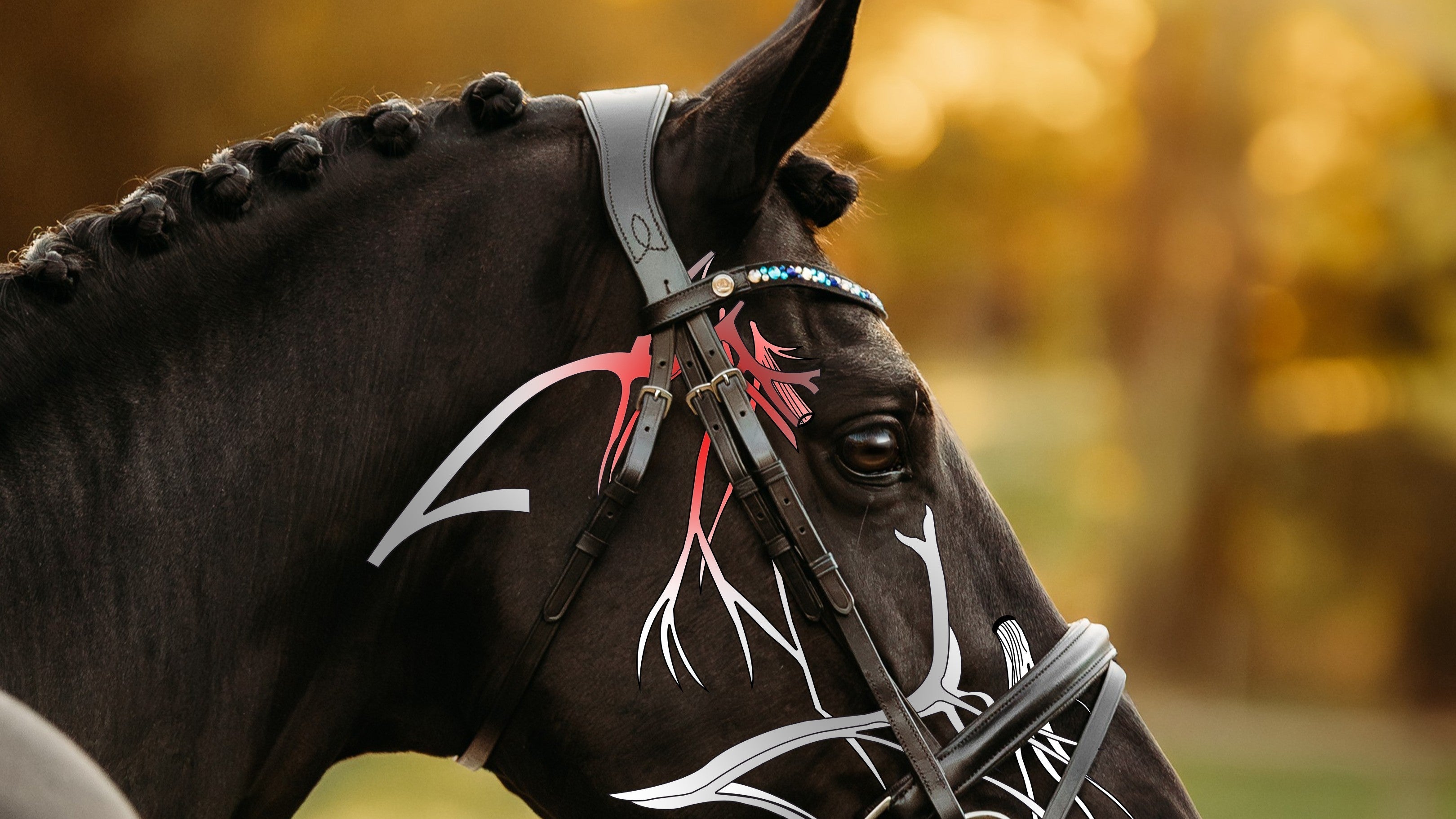
Blood flow. Major arteries run down the sides of the cheeks and under the jawline and a badly fitting bridle can compress these blood flow pathways creating pain and numbness.
The temporomandibular joint (TMJ). This small joint, located just below and slightly in front of the base of each ear, connects the lower jaw to the skull and is entirely responsible for chewing — opening, closing, and the side-to-side grinding action horses need to process feed. Badly fitting bridles often have buckles and browbands pressing on this sensitive joint.
The facial nerves. Nerve centres cluster around the TMJ and at the infraorbital foramen, just below the cheekbone. This is exactly the spot where noseband pressure is most likely to be applied — and misapplied. TMJ pain can directly cause imbalance, poor coordination, and bracing through the poll.
These three key things are central to how a horse eats, breathes, and communicates discomfort — which is why bridle fit deserves the same rigour we already apply to saddle fit.
Where bridles typically go wrong
Drawing on guidance from the Society of Master Saddlers (SMS) and bridle fitting specialists, the most common fit failures cluster around four areas:
Headpiece. It should sit comfortably over the poll and behind the ears — not tight, and not putting pressure on the bulb of the ear. Notably, an "anatomically shaped" headpiece is not automatically a better fit; the shaping can land in the wrong place for an individual horse.
Browband. Too short, and it drags the headpiece forward into the base of the ears. Too long, and it may make contact with the TMJ.
Noseband. This is where most welfare failures concentrate. The standard is a minimum of two adult fingers of clearance under the noseband at the front of the nasal bone — and the same two-finger principle applies under the cheekbone for any strap positioned there. Over-tight nosebands remain one of the most commonly seen fit failures in practice. Beyond simple discomfort, over-tightening restricts a horse's ability to chew and relax, and because horses are obligate nasal breathers, a noseband sitting too low can physically impede the nostrils and restrict breathing — with direct consequences for both welfare and performance.
Cheekpieces. These should run parallel to the facial crest, never crossing or pressing against it, with buckles sitting roughly level with the corner of the eye. Cheekpieces that run too long push the buckles up near the browband, loading pressure directly onto the TMJ — a fit fault that's easy to overlook because it looks fine from a distance.

Why this matters more than "he's just a bit fussy with his bridle"
It's tempting to read bridle resistance — head tossing, mouth gaping, evasion of the bit, reluctance to accept the bridle at all — as a training or temperament issue.
This is the crux of the welfare argument. A horse cannot explain that its noseband is compressing an artery, or that its browband is loading its TMJ every time it flexes at the poll. It can only show us — through evasion, tension, or a slow decline in performance — and it's easy to misread those signals as attitude rather than anatomy.
"Anatomical" doesn't mean automatically kinder
One point deserves particular emphasis, because it cuts against a popular assumption in the tack market: buying an "anatomically designed" bridle is not a substitute for proper fitting. Several sources make the same observation from different angles — anatomical shaping can be in the wrong place for an individual horse, and design features intended to relieve pressure in one area (like ear clearance) can simply relocate that pressure somewhere else, such as directly onto the TMJ.
In other words, the term "anatomical" describes a design philosophy, not a guarantee. Fit still has to be checked, horse by horse, against the same landmarks: poll and ear clearance, TMJ position, cheekbone and nasal bone clearance, and facial crest alignment.
The case for owner responsibility
None of this requires every owner to become a qualified bridle fitter. But it does require a baseline of literacy — the same way most riders now understand the rough principles of saddle fit even if they aren't saddlers themselves.
The argument for this is straightforward:
- The horse has no other way to flag the problem. Bridle-related pain frequently presents as a behavioural or performance issue long before it presents as a visible injury, which means owners who don't understand fit are the ones least likely to catch it early.
- The checks are simple enough for any owner to learn. Two fingers under the noseband. Cheek piece buckles level with the eye. A headpiece that doesn't drag on the ears. These are not specialist skills — they're basic literacy that takes minutes to learn and seconds to check.
- "It came in the right size" is not the same as "it fits." Off-the-peg sizing is a starting point, not a guarantee, particularly for horses whose proportions don't match a single standard size across noseband, headpiece and cheekpieces.
- Fit changes over time. A bridle that fitted a horse in spring may not fit the same horse in autumn as musculature, condition, or even the horse's stage of life changes. Fit isn't a one-time purchase decision — it needs periodic reassessment.
- Prevention is cheaper and kinder than the alternative. Where TMJ disease does progress to a genuine veterinary issue, treatment can range from dietary and management changes through to surgery in severe cases. Catching a fit problem early, at the level of "this noseband is a finger too tight," is a far smaller intervention than any of those outcomes.
The fix is education, not just equipment
It would be easy to frame this as a product problem — buy a better bridle, solved. But the research and fitting guidance referenced here converges on a different conclusion: even a well-designed bridle can be badly fitted, and even a basic bridle can be fitted well. The differentiator isn't the product. It's whether the person putting it on the horse knows what they're looking for.
That's ultimately a rider and owner education issue — one that professional fitting qualifications, careful retailers, and better-informed horse owners all have a role in closing. A horse's comfort shouldn't depend on whether its owner happened to stumble across the right article. It should be baseline knowledge, the same way we now expect basic hoof or feeding literacy from anyone taking on a horse.
Need help fitting your bridle?
Email us at customer@lumiereequestrian.com and / or set up an appointment with one of our bridle fitters: