Why the best Aussie riders leave AU soil
Australia has produced some of the world’s most successful equestrian athletes. From Olympic medallists to five-star event riders, Grand Prix dressage combinations and international showjumpers, Australian riders have repeatedly proven that being geographically removed from the traditional centre of equestrian sport is no barrier to producing world-class horses and riders.
But there is a pattern that anyone following elite Australian equestrian sport will quickly notice. As riders move closer to Olympic Games, FEI World Championships and the highest levels of international competition, many of them head overseas.
The UK has traditionally been particularly popular with Australian event riders, while Germany, the Netherlands, Belgium and other parts of continental Europe are major bases for dressage and showjumping riders.
So why? It is sometimes assumed that riders need to leave Australia because they simply cannot qualify from home. That is not entirely accurate. Australia has FEI competitions and Australian-based combinations can achieve important qualifying results domestically.
The bigger issue is geography. For Australian riders aiming at the very top of the sport, being based in Europe can provide access to a concentration of international competitions, horses, trainers and championship-level competitors that simply cannot be replicated as easily across Australia’s enormous distances.
Australia is a long way from the centre of international equestrian sport
Australia’s geographic isolation is part of what makes our equestrian community unique, but it also creates a significant logistical challenge.
Consider the European competition map. A rider based in the Netherlands, Belgium or Germany can potentially reach several different countries within a few hours of driving. A competition in Germany one weekend might be followed by another in the Netherlands, Belgium or France.
For Australian riders, even competing interstate can involve considerable travel. A rider based in Queensland travelling to a major event in Victoria or New South Wales may already spend many hours on the road. Travelling internationally with a horse is an entirely different undertaking involving flights, quarantine requirements, veterinary documentation, transport arrangements and significant expense.
That difference becomes increasingly important as riders progress through the levels. Australia has an excellent national competition scene, but there are naturally fewer FEI events within practical travelling distance than riders encounter in the major equestrian regions of Europe.
Qualifying is only one part of the equation
Olympic and FEI championship qualification can be complicated. Depending on the discipline and championship, combinations may need to achieve FEI Minimum Eligibility Requirements, commonly known as MERs, qualifying scores or other specified performances within particular time periods and levels of competition.
The exact requirements differ between dressage, eventing and showjumping and can change between championship cycles. Australia does host competitions where riders can work towards these requirements.
But technically qualifying is not necessarily the same thing as building the strongest possible case for championship selection. Australian selectors are ultimately looking for combinations capable of representing Australia successfully against the best horses and riders in the world. That makes international exposure extremely valuable.
Europe provides an extraordinary concentration of competition
Perhaps the greatest advantage of basing in Europe is simply the amount of competition available.
For an event rider, the European calendar includes an enormous range of international events, from lower-level FEI competitions through to CCI4* events, Nations Cups and some of the most prestigious five-stars in the world. The same principle applies to dressage, where CDIs throughout the season can contain riders who later appear at European Championships, World Championships and Olympic Games.
Showjumping takes this concentration even further. CSI competitions operate across Europe almost continuously, allowing riders to build experience at different heights, venues and levels of international competition.
That density creates something difficult to reproduce in Australia: choice. A rider can select competitions according to what their horse needs rather than simply attending because it is one of relatively few suitable events on the calendar.
A developing horse might need a quieter international. An experienced championship horse might need exposure to a major atmosphere. Another combination might need to chase a particular qualifying result before a deadline. Having numerous suitable competitions within driving distance makes those decisions considerably easier.
Competing against the best is preparation in itself
There is another reason Australian riders benefit from spending time overseas: the standard of competition around them.
A rider does not necessarily need to win every international competition to demonstrate championship potential. Sometimes the value lies in comparison. How does an Australian combination perform when the same class contains Olympic medallists, European champions or established championship horses? How does the horse cope with a large atmosphere? Can the combination produce consistent results across several major competitions?
These are valuable questions before sending a combination to an Olympic Games or World Championship. Europe allows Australian riders to answer them repeatedly. It also means riders become accustomed to seeing the standard required at the top of the sport every weekend.
Eventing provides perhaps the clearest example
Australian eventing has an extraordinary Olympic history, yet many of the country’s leading event riders have spent substantial portions of their careers based in the UK or Europe.
There is a practical reason. Britain and continental Europe contain a remarkable concentration of high-level eventing competitions. A European-based Australian rider can potentially campaign horses through multiple CCI4*-S and CCI4*-L competitions while also targeting major five-stars and Nations Cup events.
For combinations aiming at an Olympic Games or World Championship, that gives selectors considerably more recent international form to consider. It also gives horses valuable exposure to different course designers, terrain, surfaces and atmospheres.
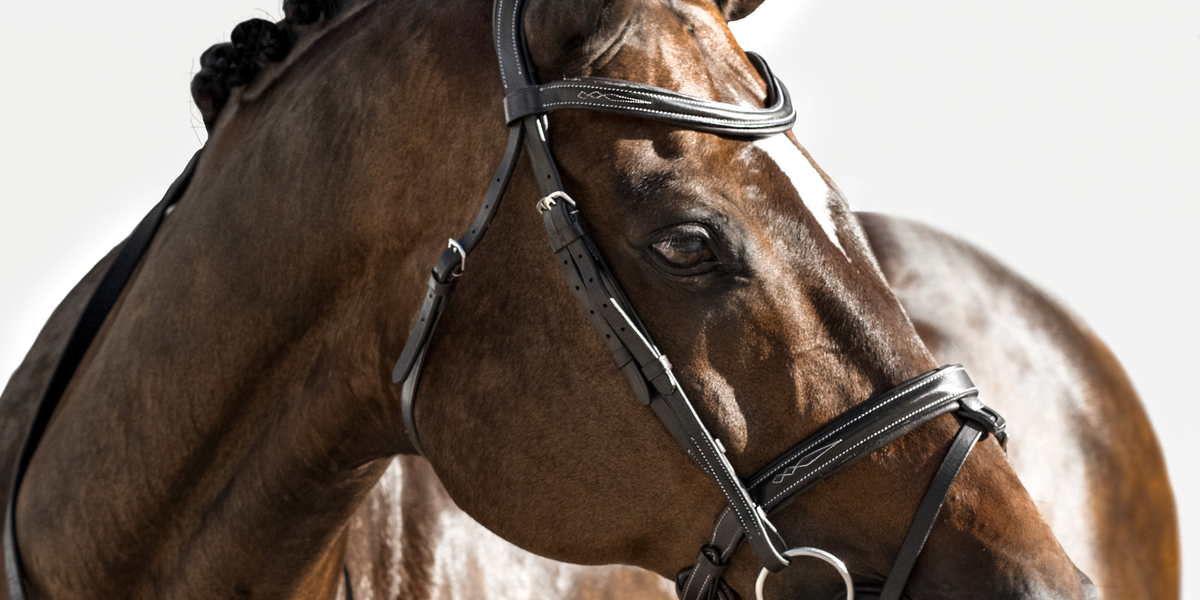
The fundamentals, however, remain the same whether a horse is preparing for a local event in Australia or a major international overseas: careful training, fitness, horse management and familiar, correctly fitted equipment. A versatile eventing bridle such as the Lumiere Milan can suit riders who prefer a classic, adaptable setup, while a correctly fitted breastplate can form part of a competition tack system where additional saddle stability is required.
Australian eventing can produce exceptionally capable horses. Going overseas allows those combinations to test that ability repeatedly against many of the horses they are likely to meet at a championship.
Dressage faces a different challenge
Dressage does not involve cross-country qualification, but geography still matters enormously. International dressage qualification relies on performances at FEI-sanctioned competitions under appropriately qualified judging panels.
Australia hosts CDIs, and these competitions play an extremely important role in giving Australian-based riders an international pathway. But Europe simply has far more international competition concentrated within a relatively small geographic area.
For an Australian Grand Prix rider based in Europe, access to international judges and major CDI competition can become part of the normal season rather than something that requires travelling enormous distances or carefully targeting a limited number of domestic opportunities.
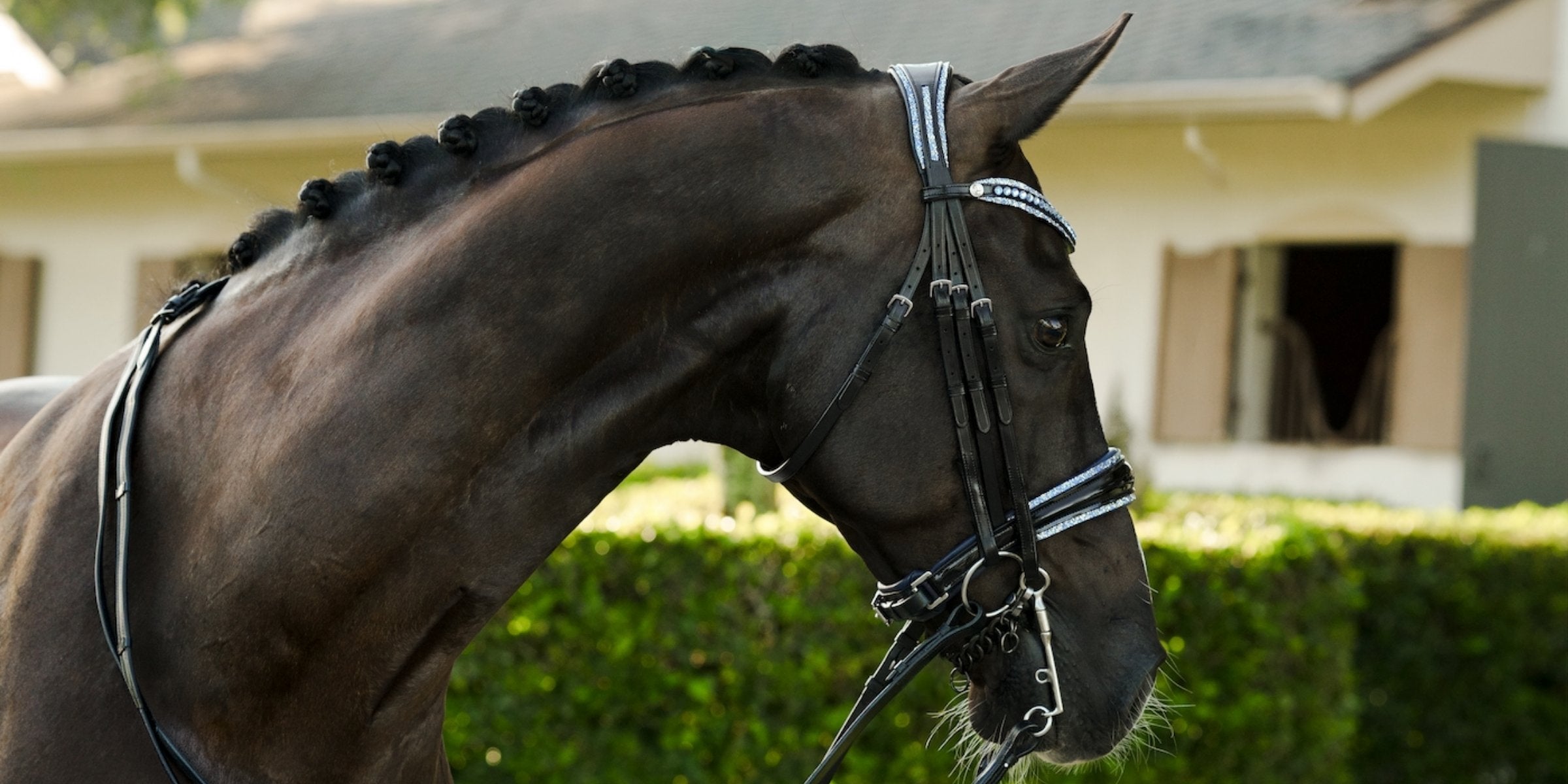
It also creates repeated exposure to the judging, atmosphere and competition environment riders will encounter at a championship. The details of preparation remain important at every level, including having comfortable, familiar dressage tack that fits the individual horse. For riders who prefer a more statement competition look, the Paris bridle is another example of an anatomical dressage bridle designed with padded areas around the poll and nose.
Showjumping rewards access to a deep international circuit
For showjumpers, international access can be even more significant. Modern elite showjumping is built around a vast network of CSI competitions, Nations Cups and ranking classes.
European-based riders can potentially compete internationally week after week. This allows horses to progress gradually through different levels while riders build international experience and results.
There is also a competitive depth that comes from being surrounded by thousands of horses and riders operating within the European jumping industry. For an Australian rider attempting to establish themselves at 1.50m and 1.60m level, regular exposure to that environment can be enormously valuable.
At this level, consistency becomes incredibly important, from training and fitness to the smaller details of competition preparation. Familiar showjumping tack such as the Lumiere Dallas bridle can be part of keeping the horse’s everyday and competition setup as consistent as possible.
Championship preparation is about more than producing one qualifying score. It is about demonstrating that a combination can repeatedly perform at international championship standard.
Then there is the challenge of getting the horse overseas
Moving an equestrian career overseas is not as simple as buying a plane ticket. The horse has to travel too.
International horse transport is highly specialised. Horses may need pre-export preparation, veterinary documentation, appropriate vaccinations and testing, quarantine procedures and carefully coordinated air transport.
Once overseas, riders need somewhere to base themselves, stabling, feed, farriers, veterinarians, transport, competition entries and support staff. They also need all of the familiar equipment their horses rely on, from rugs and grooming gear to everyday bridles and reins. Keeping familiar equipment around the horse can be one small piece of maintaining consistency while almost everything else in the environment changes.
For professional riders, relocating can mean moving an entire business. For amateur or developing riders, the financial challenge can be even greater. This is why Australian riders competing internationally often rely on a significant network of owners, sponsors, supporters and organisations behind them.
Australian riders also need to understand the administrative pathway
Competing overseas under the Australian flag involves more than entering an event directly. Riders and horses need the appropriate registrations and documentation for the competitions they are targeting, and international entries must follow the relevant Equestrian Australia and FEI processes.
For riders planning a serious overseas campaign, competition planning therefore begins well before the truck leaves the yard. Qualification windows, event schedules, horse travel, accommodation, training bases and championship selection all have to be considered together.
Why not simply stay overseas permanently?
Some riders do. For professionals whose ambitions and businesses revolve around international competition, Europe can become a long-term home. Others deliberately base overseas for a championship campaign before returning to Australia.
There are advantages to both approaches. Australia offers an exceptional equestrian lifestyle, strong domestic competition, space, established training systems and a horse culture that has produced generations of elite riders.
Europe offers density.
That single word explains much of the attraction. More FEI competitions. More championship riders. More international judges. More high-level horses. More major events within driving distance. More opportunities to test a combination against the standard it will encounter at an Olympic Games or World Championship.
It is not necessarily that the European system is better. It is that everything is closer together.
What does this mean for Australian riders coming through the levels?
The prospect of competing internationally can seem enormous for a young Australian rider. But an overseas campaign is usually the end result of years of development at home.
Australian pony clubs, coaches, breeders, owners, competitions and equestrian businesses all contribute to producing the combinations that eventually step onto the international stage.
The domestic pathway matters enormously. Riders first need to learn how to produce horses, compete consistently and progress safely through the levels. The same fundamentals of good horsemanship apply throughout that journey, from training and conditioning to correct tack fit and finding an anatomical bridle that suits the individual horse.
Then, when a combination begins approaching genuine international potential, an overseas campaign can become the next stage rather than the starting point.
The horse competing at Aachen, Badminton or an Olympic Games often started at an Australian pony club, local dressage competition, showjumping show or horse trials years earlier. The international stage may look very different, but the foundations were built at home.
Australian equestrian sport has always punched above its geographical weight
Australia faces a challenge that most major European equestrian nations simply do not: we are a long way away.
Yet Australian riders continue to appear at Olympic Games, World Championships and the biggest competitions in the sport. That is perhaps what makes Australia’s international equestrian success so impressive.
Our riders do not necessarily go overseas because Australian equestrian sport is not good enough. They go because reaching the very highest level means entering a global sport, and much of that global sport is concentrated thousands of kilometres away.
Qualifying results matter. International experience matters. Competition depth matters. Being tested against the horses and riders you will meet at a championship matters.
For many Australians, going overseas is therefore not an escape from the Australian system. It is the final extension of it.
At Lumiere Equestrian, we are proud to be an Australian-founded equestrian brand in a sport where Australian horses and riders continue to make their presence felt around the world. Whether the next destination is a local competition, an Australian FEI event or a championship campaign on the other side of the world, the journey to international sport is built one ride, one horse and one competition at a time.